
传奇故事
业内人士爆料:中国游客被遗弃系低价旅游团问题!强制消费或为默许_我的网站

一 |
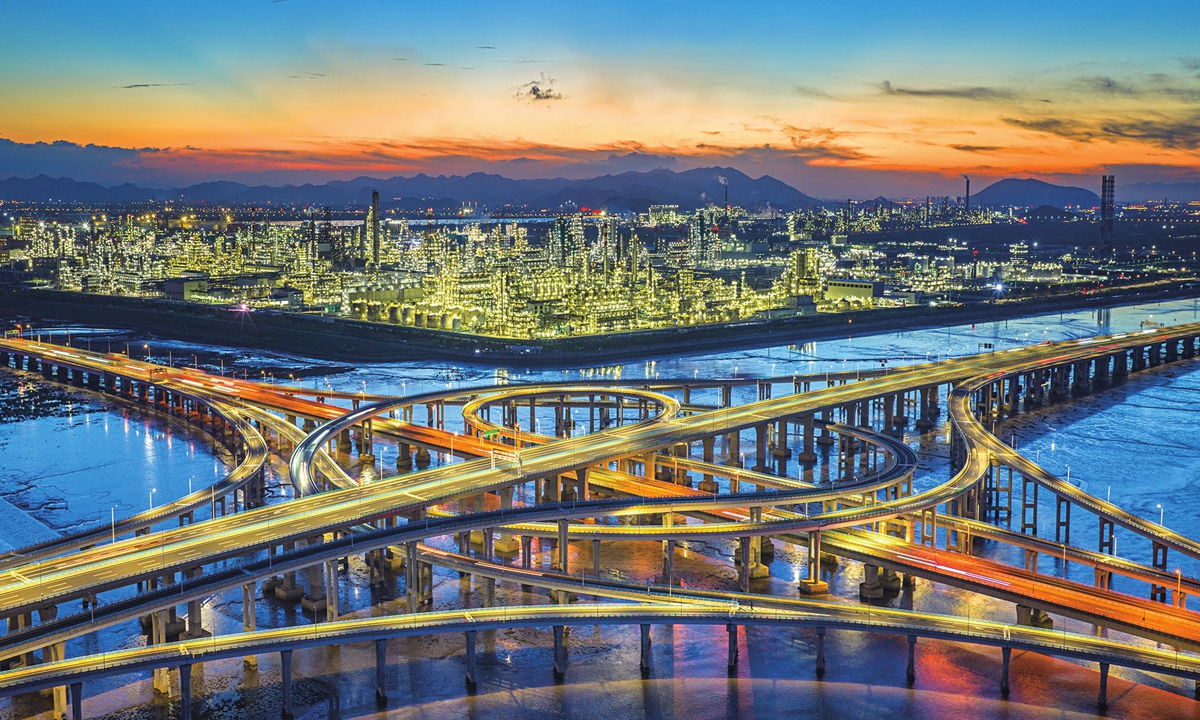
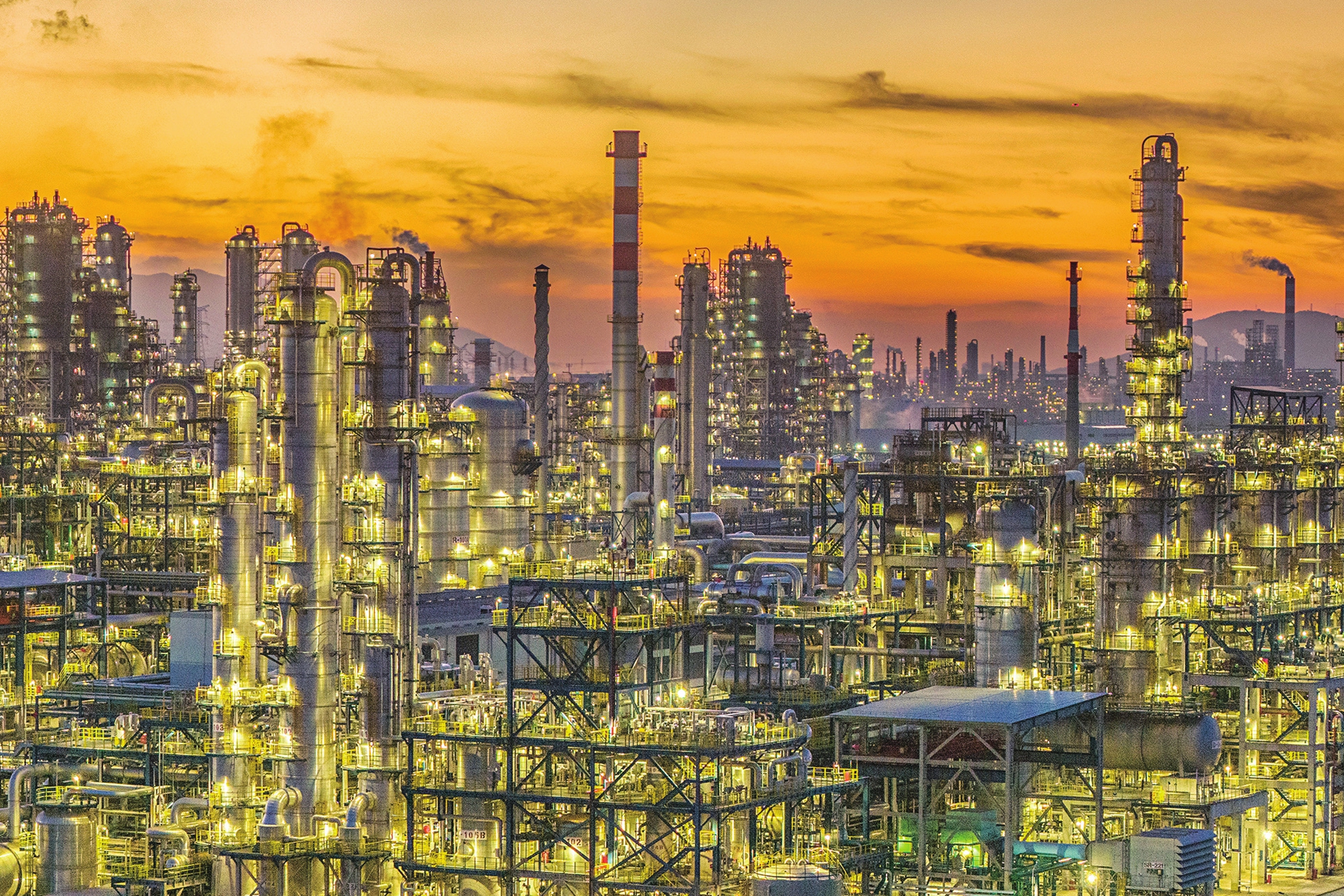
As night falls along China's East China Sea coast, rows of sprawling industrial facilities glow brightly under the dark sky. At Sinopec Ningbo Zhenhai Refining and Chemical Co., Ltd. (NZRCC) in East China's Zhejiang Province, a network of oil pipelines, towering distillation towers and neatly arranged oil storage tanks forms a futuristic "steel forest" outlined by lights and shadows.
On Chinese social media, this striking tableau has been embraced by younger generations as the essence of "cyberpunk-style hardcore romance." Amateur photographers and influencers have compiled detailed guides to the best viewing spots, complete with walking routes, camera angles, and even the optimal time to capture the scene, the so-called "blue hour," the period just before sunset.
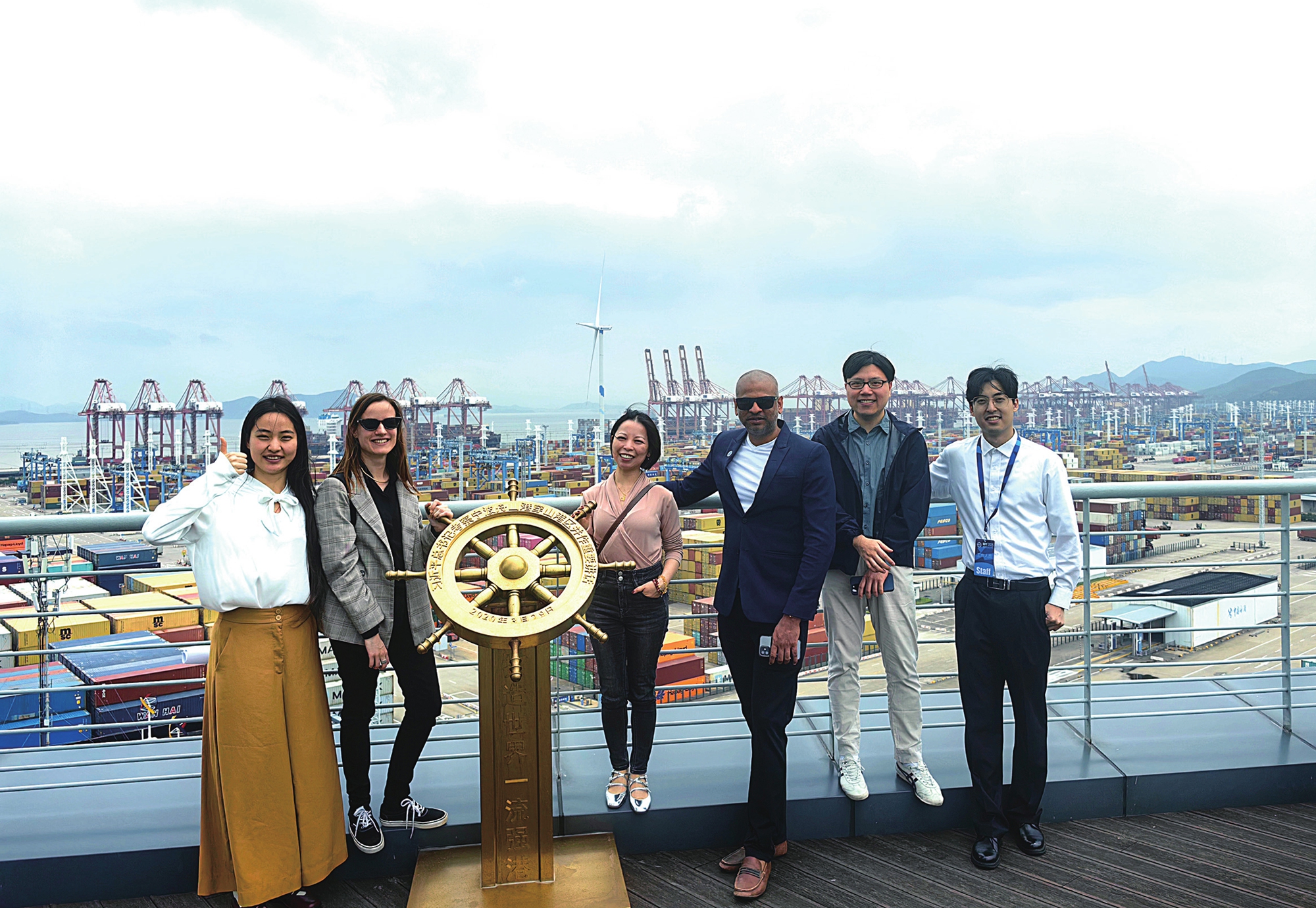
Dozens of kilometers away, Ningbo-Zhoushan Port presents another stunning industrial scene. At this super port, which has ranked first globally in cargo throughput for 17 consecutive years, massive cargo ships anchor on the blue sea, stacked colorful shipping containers stretch along the shore, and giant quay cranes line up neatly. The dynamic interplay of mechanical operation lights and natural mountain and sea scenery creates a harmonious industrial beauty.
For years, heavy chemical plants and port infrastructure were associated in the public mind with noise, pollution, and a kind of forbidding remoteness - places to be avoided. Today, however, these industrial sites have transcended their purely functional roles, emerging as vivid windows through which ordinary people can observe China's new quality productive forces, and as a new narrative of coexistence between industry, ecology, and tourism.
From avoidance to admiration
"In the past, when people thought of heavy chemicals, their first associations were pollution and safety risks - they instinctively wanted to stay away. Now, young people willingly come close, take photos, and share images of refinery towers at night. That makes us deeply proud," Zhang Da, deputy general manager of NZRCC, told the Global Times.
Zhang emphasized that the facility's newfound "cyberpunk appeal" is not a gimmick created by lighting. Tens of thousands of tourists have now visited the outer perimeter of the plant. "Visitors can intuitively experience fresh air, a tidy environment and steadily operating production equipment. These unalterable real feelings are the core reason why industrial scenery has become a new urban landmark," he said. Modern industry, once distant to the public, has become visible, tangible and approachable.
A similar shift in public perception is taking place at Ningbo-Zhoushan Port. Netizens have spontaneously explored popular hiking trails on the mountains near the port. From elevated viewpoints, visitors can watch intelligent unmanned cranes operating with precise accuracy, alongside giant wind turbines spinning in the wind. Heavy industrial facilities blend seamlessly with lush mountains and clear waters, creating a perfect balance of motion and tranquility.
Chen Jia, a local resident, often comes to the coastline to overlook the port in his spare time and brings friends, including foreign visitors, to experience the scenery. "The efficient unmanned terminals, magnificent giant ships and harbor, and refreshing mountain-sea views have broken the cold stereotype of traditional industry. This is a unique romance made in China," he said.
What gives these industrial landscapes their staying power is not the rush of a thousand camera clicks, but their genuine industrial strength and the invitation they extend to the public: to look beyond the spectacle and start asking how it all works.
"Industrial sites can become scenic spots through long-term safety and environmental governance, as well as sophisticated modern industrial management," Zhang noted. "Young people's interest in industrial landscapes is a great starting point. More importantly, we attempt to turn this temporary online attention into long-term public recognition, letting real industrial sites serve as a window for the public to learn about modern industrial systems."
NZRCC first made this understanding tangible in an unexpected place: a 15,000-square-meter woodland at the heart of the complex, where egrets have made their home. When pipeline plans originally called for cutting through the area, the company rerouted them to protect the birds' habitat. During breeding seasons, all nearby construction is suspended.
Today, the "Egret Garden" is equipped with a 24-hour livestream that has attracted over 200 million views online.
Beyond ecological progress, the company strives to translate obscure industrial jargon into everyday language for the public.
Through open houses and social media outreach, the public has come to learn that this forest of steel towers has developed key materials for artificial lung technology, produced separator films for new-energy vehicle batteries, and turned waste cooking oil into sustainable aviation fuel that now powers commercial flights.
What began as a casual appreciation of a nighttime spectacle has gradually deepened into a genuine understanding that this once-distant industry underpins much of daily life, from transportation and housing to health care and the transition to cleaner energy, making China's new quality productive forces more tangible and understandable, Zhang said.
Ningbo-Zhoushan Port has likewise carved out a path toward meaningful public engagement. It has hosted a wide range of public exchanges and educational programs while carefully designing popular science exhibition halls and outdoor viewing sites to engage visitors.
"Since its founding, a port has always been about openness and connection," Zhuge Xurong, director of the Cultural News Center at Ningbo Zhoushan Port Company Limited, told the Global Times. That openness, he said, extends beyond shipping routes to the exchange of ideas and knowledge between the port and the public.
Such open industrial scenes have become common across Ningbo's industrial parks, with bilingual science popularization activities bringing modern factories closer to the public. Online content creators frequently visit these industrial bases, unveiling the mysteries of Chinese manufacturing to wider audiences.
The trend stretches nationwide: intelligent heavy trucks in Lingang new area of the Shanghai free trade zone, drone manufacturing bases in Shenzhen, rail-transport industrial parks in Chengdu. Meanwhile, older industrial sites are being transformed into cultural and creative parks, preserving their historical textures while injecting modern vitality.
From awe to intimacy, from distance to engagement - this distinctly Chinese brand of industrial romance is reaching more people, being better understood, and continuing to evolve.
。

二 | 近日,一起游客被遗弃路边的事件在新加坡引发了广泛关注。8月16日中午12时许,15名中国游客因疑似未购买新加坡旅行社旅巴司机出售的纪念品,随后被遗弃在路边。这一事件引起了新加坡旅游局的高度重视,并已对涉事的各方展开调查。同时,中国驻新加坡大使馆也发出呼吁,希望新加坡旅游从业者与中国旅行社共同努力,维护中国公民在新加坡旅行的安全与良好氛围。图源:FACEBOOK据知情人士透露,这类事件背后折射出的是新加坡低价旅游团的问题。

三 | 这类被称作“购物团”的旅游团,通常是由中国游客通过中国旅行社报名参加,抵达新加坡后,由当地旅行社安排导游接待。游客需签署协议游览指定商店 一名新加坡旅游业者展示了一张中国旅行社的宣传单,其中显示,六天四夜的新马游,每人只需支付人民币3998元(约740新元),包含了往返机票、酒店住宿、餐食、交通与导游服务。然而,这些看似优惠的旅游团实际上隐藏着不少问题。业者透露,由于预算限制,司机与导游的薪酬并不高,因此,新加坡旅行社默许司机或导游通过售卖纪念品来赚取外快。

四 | 这些纪念品通常是钥匙圈、冰箱贴等小物件,价格相对便宜。

五 | 然而,随着购物团的增多,一些司机可能因工作量增大而感到不满,甚至将情绪发泄在游客身上。

六 | 图源:抖音在网络上查询便可发现,确实有不少中国旅行社在社交媒体上推广新马旅游团。这些六天四夜的行程价格多在人民币2500元至4000元(约460至740新元)之间,甚至注明包含了一切开销。然而,游客出行前还需签署一份协议,说明旅行期间须参观当地两家购物店,包括售卖珠宝、保健品、土特产与药油等的商店。廉价旅游团仅在新加坡住一晚 一份六天四夜的新马游行程安排显示,游客在第一天下午入境新加坡后,会先去游览圣淘沙与滨海湾花园,随后在新加坡酒店入住一晚。第二天,游客被带去参观鱼尾狮、赞美广场、哈芝巷与小印度等地,然后乘车前往马六甲。接下来的几天,游客将在马六甲、吉隆坡等地参观景点,最后在第六天返回中国。图源:FACEBOOK由于新加坡酒店房费较高,购物团通常只在新加坡停留一晚。

七 | 与非购物团相比,价格相差超过一倍。一名从业10多年的销售总监表示,若非购物团,一般四天三夜的行程,每人费用至少是1400新元,还不包括往返机票,这类行程通常会安排两天自由活动,并包括环球影城、动物园等景点。新加坡旅游局发言人指出,若行程中明确标注出活动,导游可以带团员完成行程。但根据执照注明的条件,导游不能强迫游客购物赚取佣金。

八 | 据了解,本地的一项条规明确规定,持有执照的导游不能为任何人招揽生意,或收取任何佣金、费用、礼物或相关物品,以当做带旅客光顾生意的回报。中国依然是新加坡最大的客源国 在上个月的入境旅客中,中国旅客占据了最大比例,超过了总旅客量的四分之一,达到了412,940人次。这是自2月份新中两国实施免签政策以来,迎来的第一个中国学校暑假,因此7月份中国旅客的数量同比去年增长了近80%。图源:FACEBOOK在今年的前七个月,入境新加坡的中国旅客总数已经达到1,860,000人次,与去年同期相比几乎翻了一番。

九 | 业内人士表示,在这个暑假,大多数中国旅客倾向于选择自由行,而组团旅游中,游学团占据了相当一部分。

十 | 新加坡美秀旅游有限公司董事许美秀便是,今年7月,她的公司接待的入境旅客中,有90%来自中国,与去年同期相比,中国旅客的数量增长了40%。自从新中两国实施免签政策以来,美秀旅游的业务重心从以往的小包团和亲子团转向了承接游学团。

十一 | 尽管今年整体入境旅客人次有所上升,但团队旅客的数量却有所下降。新加坡百万假期的执行董事翁树伟指出,公司7月份接待的入境旅客量整体比去年同期下降了大约20%,而旅行社的成本却增加了大约30%。免签政策实施后,来自中国的定制小包团和自由行散客数量增加,但旅游团的数量却减少了,主要原因是机票价格较高。此次事件不仅暴露了低价购物团的弊端,也提醒了游客在选择旅游产品时要擦亮眼睛,避免陷入消费陷阱。同时,有关部门应加强对旅游行业的监管,确保游客的合法权益得到保障。只有各方共同努力,才能维护新加坡旅游市场的健康发展,让游客在新加坡留下美好的回忆。
Current article:http://ioljs9.ganweilingmukuai.shop/news/20260826_7045457.html
Published on:18:00:31